







Native vs Hybrid vs Web Apps: Tips to Pick the Best

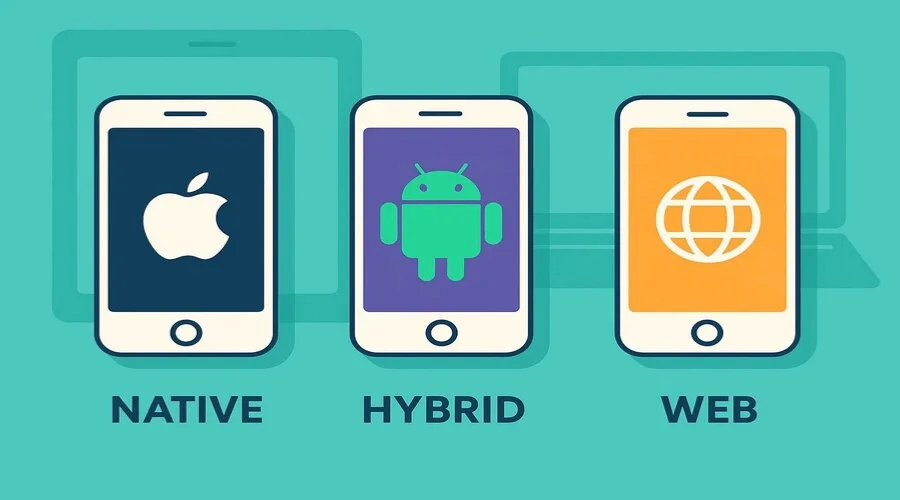
Illustration comparing native, hybrid, and web apps, highlighting differences in performance, development approach, and platform compatibility.

Nowadays, mobile apps are essential for businesses, startups, and everyday users. When planning your next project, understanding Native vs Hybrid vs Web Apps is crucial. Choosing the right type directly affects performance, cost, and the overall user experience.

In this mobile app comparison, we’ll explore the strengths, weaknesses, and real-world examples of each type to help you decide which is best for your project.

What Are Native, Hybrid, and Web Apps?

Before diving into comparisons, let’s define each app development type. For a broader overview, see our beginner’s guide to mobile app development.

01. Native Apps

Native apps are made just for one platform, like iPhone (iOS) or Android. They are developed using platform-specific programming languages, such as Swift for iPhones and Kotlin for Android devices (see the Android app development guide for official documentation)

Mini Case Study: Instagram
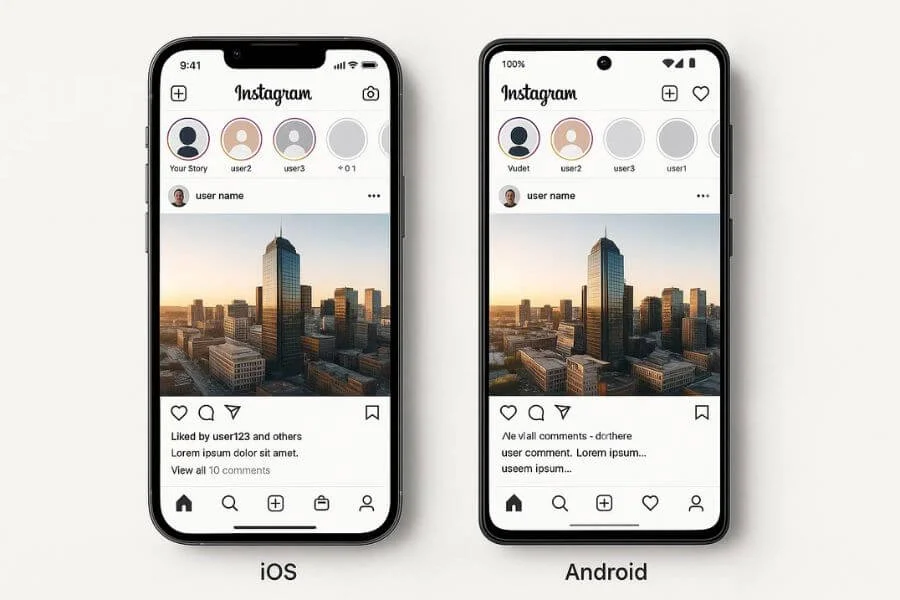
Image showing the Instagram native app running on iPhone and Android devices, highlighting platform-specific interface elements.

Instagram uses native apps for iPhone and Android to make the app fast and smooth. By building separate apps for each platform, Instagram can use phone features like the camera, notifications, and offline photo storage, keeping users happy and engaged.

Key Features

  • Made for a Specific Platform: Works only on iOS or Android.
    Fast Performance: Optimized for the platform for smooth usage.
  • Access to Device Features: Uses camera, GPS, contacts, and more.
  • Better User Experience: Feels like a natural part of the device.
  • Offline Access: Can function without internet (depending on the app).
  • App Store Availability: Downloadable from Google Play or Apple App Store.

While native apps are great for performance, not every project needs a platform-specific approach. That’s where hybrid apps come in.

02. Hybrid Apps

Hybrid apps mix features of native apps and web apps. They are built using web technologies like HTML, CSS, and JavaScript, but run inside a native container. This allows them to function as cross-platform apps. Popular tools for building hybrid apps are Ionic and React Native for hybrid app development.

Mini Case Study: Uber
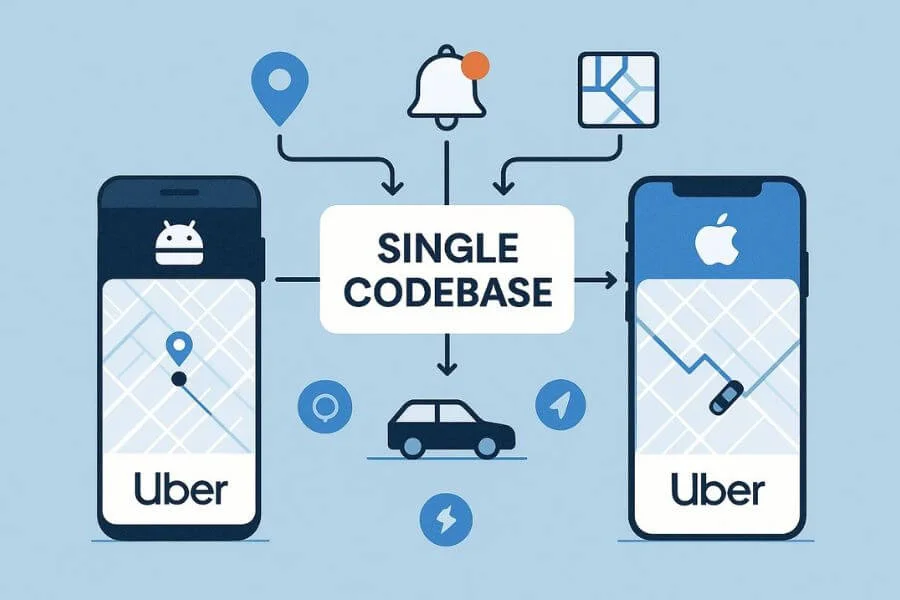
Illustration showing Uber as a hybrid app running cross-platform, highlighting shared codebase and consistent experience on iOS and Android

Uber uses a hybrid app to work on both iPhone and Android with just one code. This lets Uber use important phone features like GPS and notifications. It also makes it faster to update the app for all users, helping Uber grow quickly around the world.

Key Features

  • Works on Multiple Platforms: Single codebase for iOS and Android.
  • Developed with Web Technologies: HTML, CSS, and JavaScript.
  • Installed Like Native Apps: Downloadable from app stores.
  • Access to Some Device Features: Camera, GPS, notifications, with some limitations.
  • Faster Development: Quicker and more cost-effective than separate native apps.
  • Internet Connection May Be Needed: Some features require online access.

If you want an even simpler approach without app installation, web apps could be the right choice.

03. Web Apps
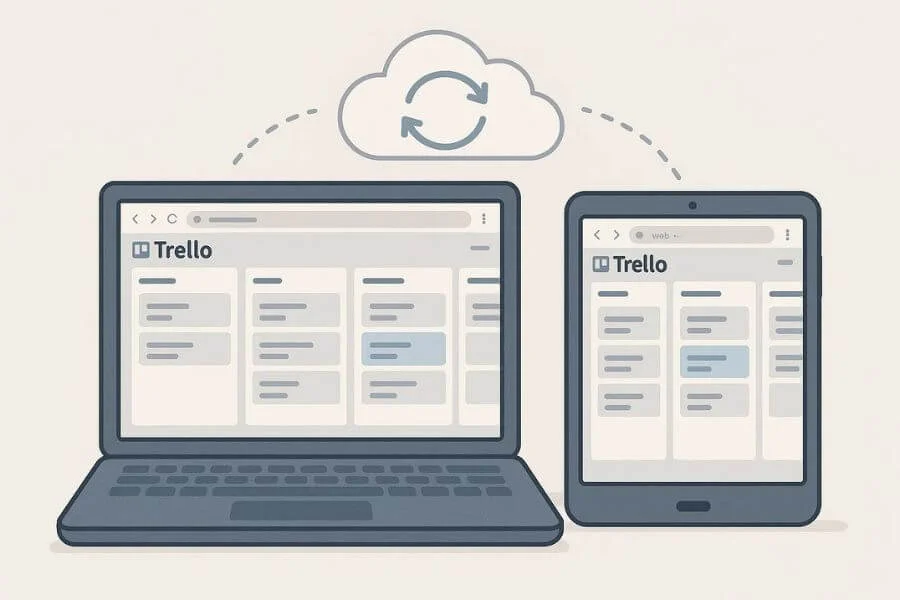
Image showing the Trello web app displayed on a laptop and tablet, highlighting its browser-based interface and responsive design

Web apps are essentially websites optimized to look and behave like mobile apps. These apps open in a browser and don’t need to be downloaded or installed. Examples include Google Docs, Trello, and Gmail.

Mini Case Study: Trello

Trello is a web app designed for cross-device accessibility. Users can manage boards from any device without downloading the app. Trello’s web-first approach ensures instant updates and easy maintenance, making it ideal for collaborative work environments.

Key Features

  • Runs in a Browser: No download needed; works on any device.
  • Platform Independent: Works on iOS, Android, Windows, or Mac.
  • Easy to Update: Users always see the latest version instantly.
  • Internet Connection Required: Most features need online access.
  • Limited Device Access: Can’t fully use device hardware, though some features are possible.
  • Cost-Effective: Usually cheaper and faster to develop than native or hybrid apps.

Now that we understand each app type individually, let’s compare their key differences side by side.
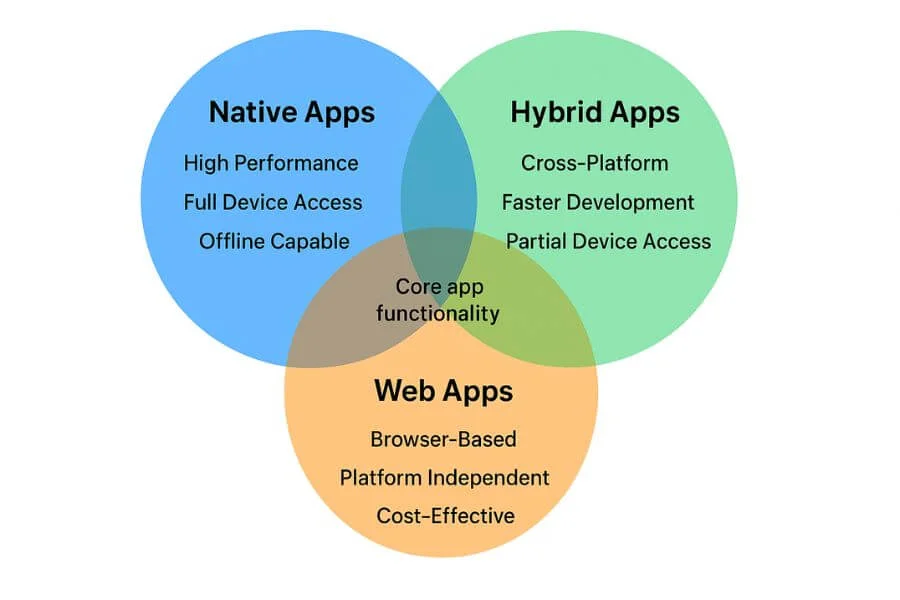
Venn diagram comparing native, hybrid, and web apps, showing shared features and key differences in performance and development approach.

Key Differences Between Native vs Hybrid vs Web Apps

FeatureNative AppsHybrid AppsWeb Apps
PlatformBuilt for a specific platform (iOS or Android)Can run on multiple platformsRuns in any web browser
Programming LanguagesPlatform-specific (Swift for iOS, Kotlin for Android)Web technologies (HTML, CSS, JavaScript) inside a native wrapperHTML, CSS, JavaScript
PerformanceFast and smoothSlower than native, faster than webDepends on browser; usually slower
Device FeaturesFull access to camera, GPS, etc.Access to most features, but sometimes limitedLimited access to device features
InstallationDownload from App StoreDownload from App StoreNo installation needed; accessed via browser
Offline UseCan work offlineSome offline functionalityUsually requires the internet
Development CostHigh (separate code for each platform)Medium (one codebase for multiple platforms)Low (single codebase for all devices)
UpdatesUpdates via app storeUpdates via app storeUpdates instantly online

Understanding these differences helps clarify the pros and cons of each approach.

Pros and Cons of Native vs Hybrid vs Web Apps

Now that we’ve compared the key features of native, hybrid, and web apps, let’s take a closer look at the pros and cons of each app type.

Native Apps

Pros

  • Best performance
  • Full access to device features
  • Great offline experience

Cons

  • Expensive to develop for multiple platforms
  • Longer development time

Hybrid Apps

Pros

  • Faster development with a single codebase
  • Cross-platform compatibility
  • Easier to update

Cons

  • Limited access to device features compared to native
  • Slightly lower performance

Web Apps

Pros

  • Cheapest to develop
  • Works on any device with a browser
  • Easy to maintain

Cons

  • Cannot fully utilize device hardware
  • Limited offline capabilities
  • Performance depends on the browser

So, which app type should you actually choose for your project?

Which One Should You Choose?

Choosing the right app development type depends on your project, budget, timeline, and audience:

  • Native Apps: Best if you want top performance, smooth user experience, and full access to device features—but they cost more and take longer to build.
  • Hybrid Apps: A good middle ground if you want to reach multiple platforms quickly and affordably, with most device features available.
  • Web Apps: Ideal if you want a simple, low-cost app that works on any device and doesn’t require installation, but may have limited features and slower performance.

Tip: Think about what matters most for your users—speed, features, cost, or ease of access—then pick the app type that fits those priorities.

Common Questions About Native, Hybrid, and Web Apps

1. Which is cheaper to develop?

Web apps are generally the cheapest, followed by hybrid apps. Native apps are the most expensive due to separate development for each platform. Development cost also depends on the stages of building an app—our Step-By-Step Mobile App Development Process in 2025 explains this in detail.

2. Can a hybrid app replace a native app completely?

It depends on your app’s complexity. Hybrid apps work well for simpler applications but may fall short for graphics-heavy or highly interactive apps.

3. Do web apps work offline?

Most web apps require an internet connection, though some Progressive Web Apps (PWAs) offer limited offline functionality.

4. Which type offers the best performance?

Native apps provide the smoothest and fastest performance since they are built specifically for the platform.

5. How does app maintenance differ?

Native apps require separate updates for each platform, whereas hybrid and web apps have a single codebase, making maintenance easier and faster.

Conclusion

Choosing between native, hybrid, and web apps depends on your project goals and what matters most for your users. Native apps are best for high-performance, feature-rich solutions. Hybrid apps provide cross-platform benefits with faster development, while web apps are cost-effective and widely accessible.

If you want professional guidance or a custom mobile solution, explore our Mobile App Solutions to get started. By understanding the differences between Native vs Hybrid vs Web Apps, you can make an informed choice that meets your business goals.

Show your love

Step-By-Step Mobile App Development Process in 2025

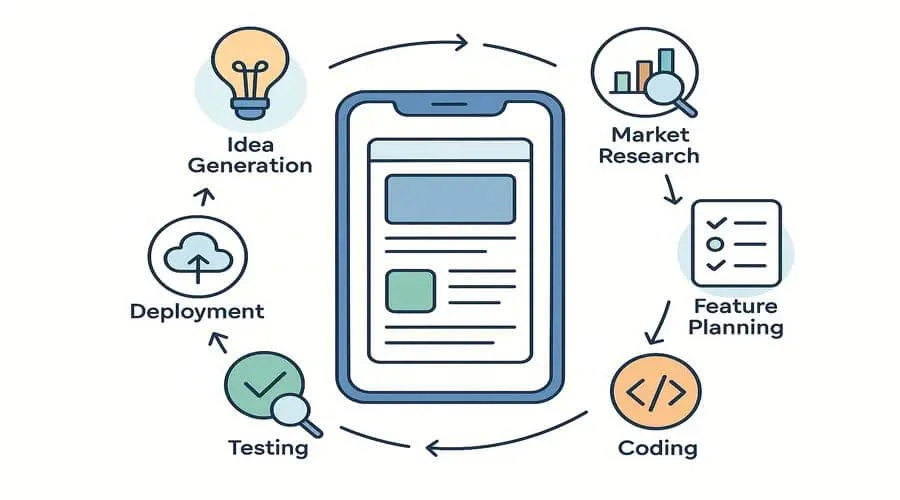
Diagram illustrating the mobile app development process, including planning, design, development, testing, and deployment stages.

Nowadays, having a mobile app is no longer a luxury— it’s a must-have to stay competitive. And whether you’re an entrepreneur, a startup founder, or running a growing business, it’s important to understand how mobile apps are made. Knowing the process helps you turn your idea into a real app that people will actually enjoy using.

In 2025, mobile apps are expected to focus more on AI features, personalized experiences, and cross-platform accessibility. Understanding the development process will help you stay ahead and build an app that stands out.

This guide will take you through every important stage of making an app — from the first idea to updates after launch. You’ll get practical tips, clear steps, and expert insights to plan and build your app successfully.

What is the Mobile App Development Process?

The mobile app development process is a series of steps to design, build, test, launch, and maintain an app. It combines technical work, smart planning, and creativity to turn an idea into a working app for smartphones and tablets.

Types of Mobile Apps

There are three main types of mobile apps:

  • Native apps –  Made for just one platform, like iOS or Android, using the platform’s own coding language for the best performance.
  • Hybrid apps – Built using cross-platform frameworks like Flutter or React Native, these apps run on both iOS and Android with a single codebase.
  • Web apps – run in a mobile browser instead of being downloaded from an app store.

Each type has its own advantages and disadvantages. No matter which type you choose, the steps to develop it are usually the same. 

Knowing the types of apps is just the beginning. To create an app that users love, you first need to ensure your idea solves a real problem. Let’s start with ideation and market research—the foundation of every successful app.

Mobile App Development Process: Step-by-Step

Creating a mobile app takes several important steps, each helping to turn your idea into an app that people will enjoy using. Let’s explore these steps in detail. For a faster overview, check out our Mobile App Development Quick Guide — perfect if you want to see all the steps at a glance.

Step 1: Ideation and Market Research

Illustration showing app idea market research steps, including audience analysis, competitor study, and market demand evaluation

Every successful app starts with a strong idea — but not all ideas are worth building. That’s why market research is the foundation of the development process.

Start by pinpointing the challenge your app aims to fix. Consider asking yourself:

  • Is this a real problem people are facing?
  • Are there existing apps solving it?
  • If yes, can mine do it better?

Next, study your competitors. Look at their app features, design, user reviews, and pricing. Tools like Google TrendsApp Annieand Statista can help you understand demand, track trends, and find gaps in the market.

Finally, understand your target audience. Who will use your app? What devices do they prefer? What kind of experience or features would make them choose and enjoy your app? Creating user personas — a clear picture of your ideal users — will guide your design and development decisions.

Step 2: Define Features and Functionalities

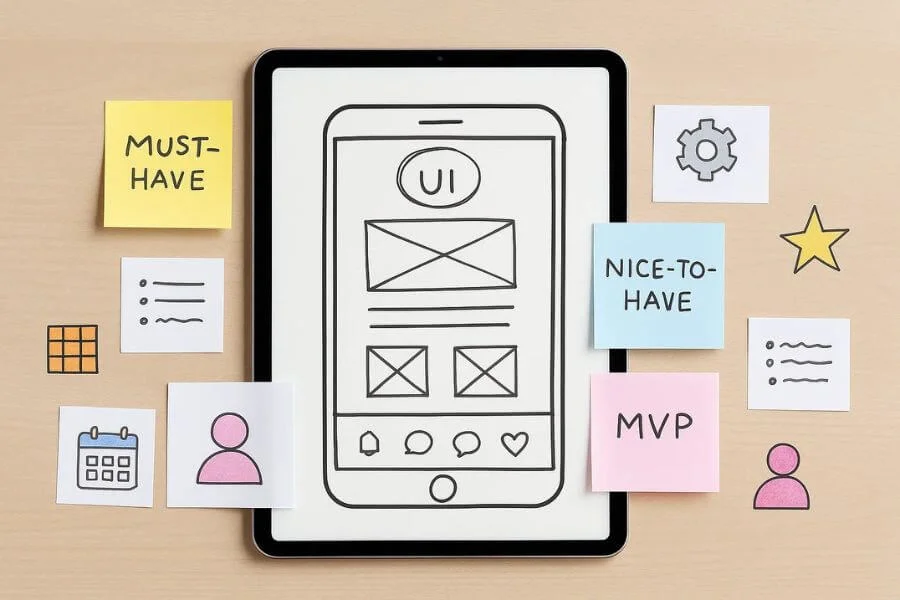
Graphic illustrating app feature planning, outlining core features, user needs, and prioritization for the development process.

With your research done, it’s time to define your app’s core features. This is a crucial step that shapes the scope of your project, timeline, and budget.

Avoid the trap of trying to do everything at once. Focus on creating a Minimum Viable Product (MVP) — a stripped-down version of the app that delivers just enough functionality to solve the core problem and collect user feedback.

Create a list of must-have features (essential to your app’s purpose) and nice-to-have features (those that can be added later in future updates).

Also, build simple user stories like: “As a user, I want to receive reminders about my medication so I can stay consistent.” These stories help guide the UX flow and make sure each feature has real user value.

Step 3: Choosing the Right Tech Stack

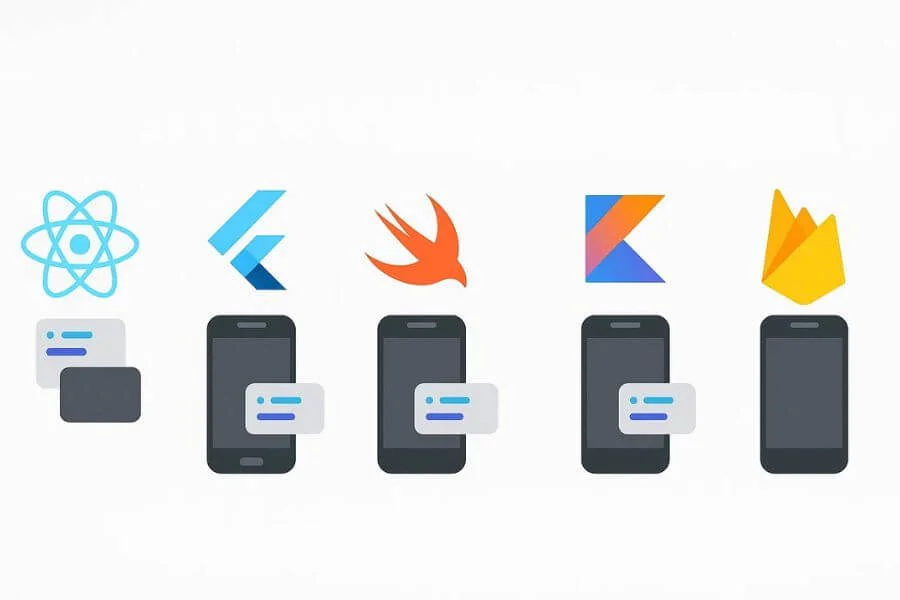
Diagram showing the tech stack for mobile app development, including frontend frameworks, backend technologies, and database tools.

Your tech stack is the combination of programming languages, tools, and frameworks you use to create your app. Picking the right one early is important because it affects your app’s speed, performance, and ability to grow.

For example, if you’re developing a native iOS app, Swift would be the go-to language. For Android, you’d use Kotlin. If you’re targeting both platforms but want to save time and resources, cross-platform tools like Flutter or React Native may be ideal.

Don’t forget the backend, the part of your app that runs on the server and handles data, authentication, and other behind-the-scenes functions. Depending on your app’s complexity, you might use Node.js, Django, or Firebase for things like databases and user authentication.

Your tech choices will affect hiring, development time, and future updates, so choose carefully to make your app efficient and scalable.

Step 4: UI/UX Design

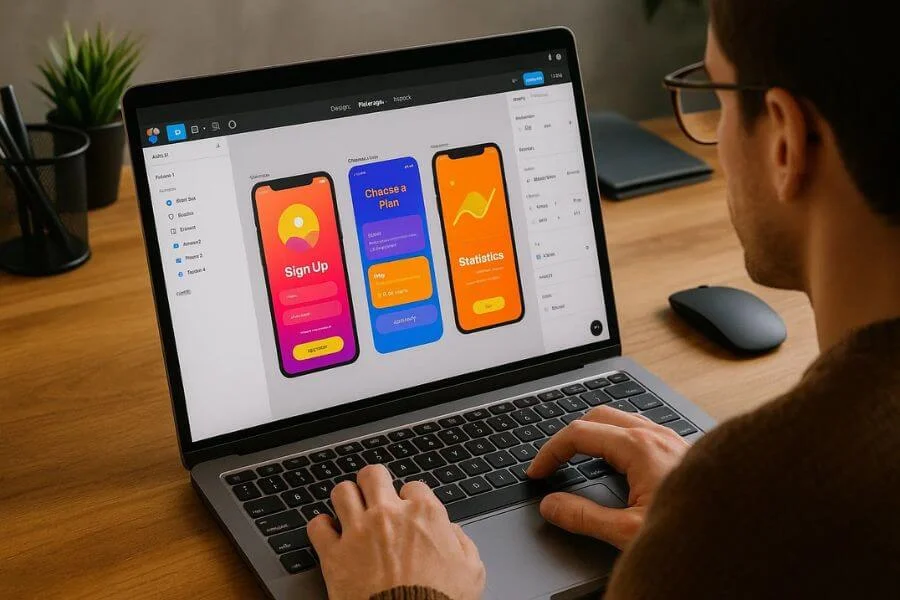
Illustration of mobile app UI/UX design principles, highlighting layout, usability, visual hierarchy, and user-centered design elements.

Great app design isn’t just about appearance — it’s about creating an experience that’s easy, enjoyable, and keeps users coming back while strengthening your brand.

The design phase typically starts with wireframes, which are simple sketches of each screen to establish layout and flow. Then, designers build interactive prototypes using tools like FigmaAdobe XD, or Sketch to simulate the user experience.

Keep these key design principles in mind:

  • Ensure clarity in navigation and content
  • Maintain consistency across screens
  • Design for accessibility (e.g., readable fonts, color contrast)

User testing at this stage helps validate your design choices before development begins. Feedback from real users will reveal pain points and usability issues early.

Step 5: Mobile App Development (Frontend + Backend)

Image showing developers building a mobile app collaboratively, working on coding, UI design, and testing across multiple devices

Now it’s time to bring the design to life with code.

Mobile app development usually happens in two layers:

  • The frontend, which is the part users interact with — buttons, screens, animations
  • The backend, which handles data, authentication, servers, and integrations

Most professional teams follow the Agile methodology, breaking the development process into short sprints that deliver specific features on a weekly or bi-weekly basis. This allows continuous iteration and feedback without waiting until the very end.

Use tools like Git or Bitbucket for version control, and test your code regularly to make sure the app works smoothly from the start.

Step 6: Testing and Quality Assurance

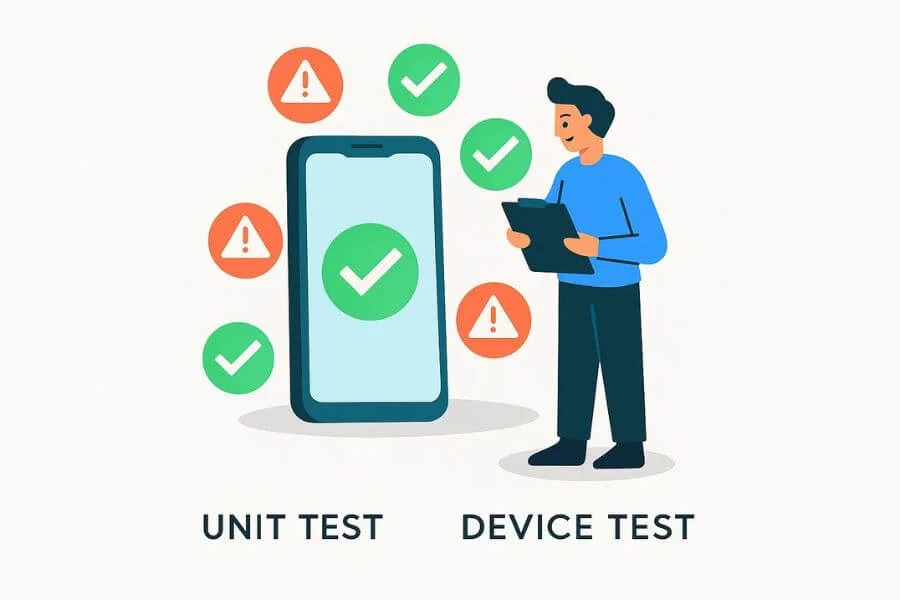
Illustration showing mobile app testing and QA processes, including bug detection, performance checks, and quality assurance workflows

Even the most well-coded app can fail if it hasn’t been tested properly.

Your testing process should include:

  • Unit testing (checking individual components)
  • UI testing (ensuring the interface behaves as expected)
  • Integration testing (verifying modules work together)
  • Device testing (to confirm compatibility with various screen sizes and OS versions)

Also, don’t overlook performance testing to ensure the app loads quickly, handles data smoothly, and performs under pressure. Use tools like Appium, TestFlight (for iOS), and Firebase Test Lab to run thorough QA checks and catch issues early.

Step 7: Deployment and Launch

Mobile App Launch

After thorough testing ensures your app is stable and user-friendly, the next step is deployment. Launching your app isn’t just pressing ‘publish’—it’s about carefully introducing it to the market for maximum impact.

For Android, upload your app package (APK or AAB) to the Google Play Console for review and publishing. Google’s review process typically takes a few hours to a couple of days.

For iOS, use Xcode to submit your app to the App Store via the Apple Developer Console. Apple reviews are often more stringent and can take longer.

For app store optimization (ASO), see resources like Apple’s App Store Guidelines and Google Play Console Help. These help you ensure your app meets store requirements and reaches the right audience.

To optimize your app store listing:

  • Write a clear and compelling app description
  • Use relevant keywords for app store optimization (ASO)
  • Include high-resolution screenshots and a video preview
  • Choose a simple, recognizable app icon

Consider a soft launch to a limited audience before going fully public. This allows you to fix last-minute issues based on real-world usage.

Step 8: Post-Launch Monitoring and Updates

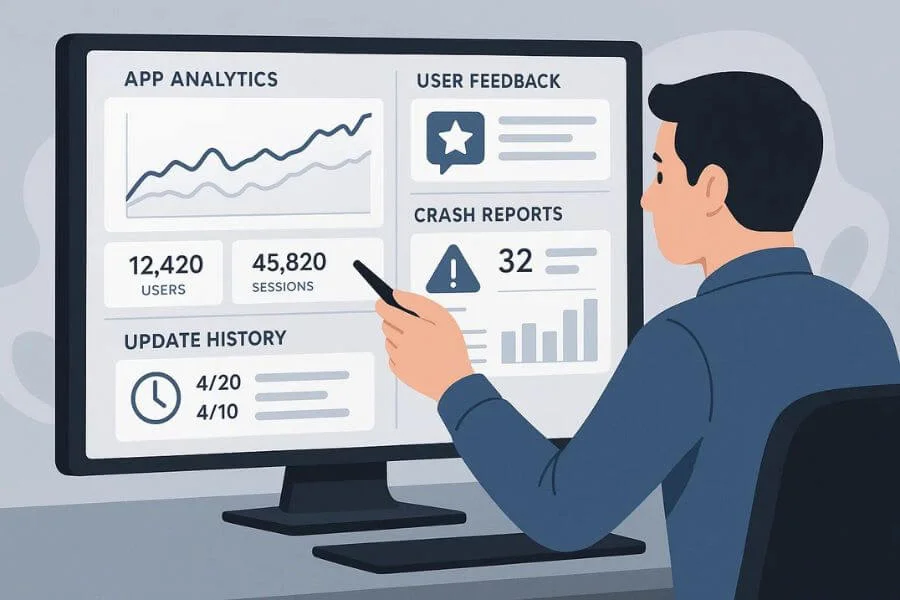
Illustration showing app performance monitoring tools tracking speed, crashes, user behavior, and real-time app health metrics.

The app launch isn’t the end — it’s just the beginning of the real work.

Monitor your app’s performance using analytics platforms like FirebaseMixpanel, or Amplitude. Keep an eye on important metrics like how often users return, how many are active, app crashes, and user activity within the app. 

Listen to user feedback from reviews and support messages, and respond promptly to improve their experience. Prioritize bug fixes and plan regular updates to improve features and add functionality over time.

Building a loyal user base depends on your ability to listen and improve — consistently.

FAQs About the Mobile App Development Process

How long does mobile app development take?

It depends on the app’s complexity. A simple MVP can take 2–4 months, medium complexity apps 4–6 months, and advanced apps with custom features 6–12 months or more.

What is the cost of developing a mobile app?

Costs vary based on complexity, platform, and features. Simple apps may cost a few thousand dollars, while advanced apps with multiple features can cost much more.

Can I create an app without coding?

Yes. Platforms like Adalo, Thunkable, or Bubble allow you to build simple apps without writing code. These are great for MVPs or small internal tools.

Should I start with iOS or Android?

Choose iOS if your audience is mainly in North America or Western Europe and monetization is a priority. Choose Android for a broader global reach and more flexibility.

Should I hire a freelancer or a development agency?

Freelancers are ideal for smaller budgets and quicker projects. Agencies are better for complex apps requiring full-service teams and long-term support.

Final Thoughts: Navigating Your App Journey Successfully

Developing an app in 2025 comes with exciting opportunities like AI features, personalized experiences, and cross-platform accessibility. By following these clear, step-by-step phases, you can turn your idea into a competitive, future-ready app that users truly enjoy.

From testing your idea and designing an intuitive experience to launching on app stores and building a loyal user base, every stage contributes to your app’s success. Stay adaptable, learn from user feedback, and keep improving your app to create a strong, valuable digital product. Or partner with a trusted team — explore our mobile app development services.

Show your love