


How to Choose the Right Video & 3D Services Partner: Complete Guide (2026)
Choosing a video and 3D services partner is not just about finding a company with a good portfolio. You also need to look at its experience, work process, communication, pricing, and ability to meet deadlines.
A good video and 3D service provider can become an extension of your creative team. The wrong one can lead to missed deadlines, repeated revisions, inconsistent quality, and unexpected costs.
If you are comparing video production companies, 3D studios, or creative service providers, use this guide to evaluate your options before making a decision.
What Does a Video & 3D Services Partner Do?
A video and 3D services partner provides creative production support. Businesses can outsource this work instead of handling everything in-house.
Depending on the provider, services may include:
- Video editing
- Product video production
- Promotional videos
- Explainer videos
- Motion graphics
- Social media video content
- 3D animation
- 3D modeling
- 3D product visualization
- 3D rendering
- Architectural visualization
- 3D packaging visualization
- Product animation
Some providers focus on one service. Others offer both video and 3D services. The right choice depends on your project needs. For example, an ecommerce brand may need 3D product renders and short promotional videos. A marketing agency may need a partner that can handle different projects every month.
How to Choose a Video & 3D Services Partner
Start by evaluating the provider against several practical criteria. Portfolio quality matters, but it should not be the only factor. Here are the most important things to check.
1. Review Relevant Portfolio Work
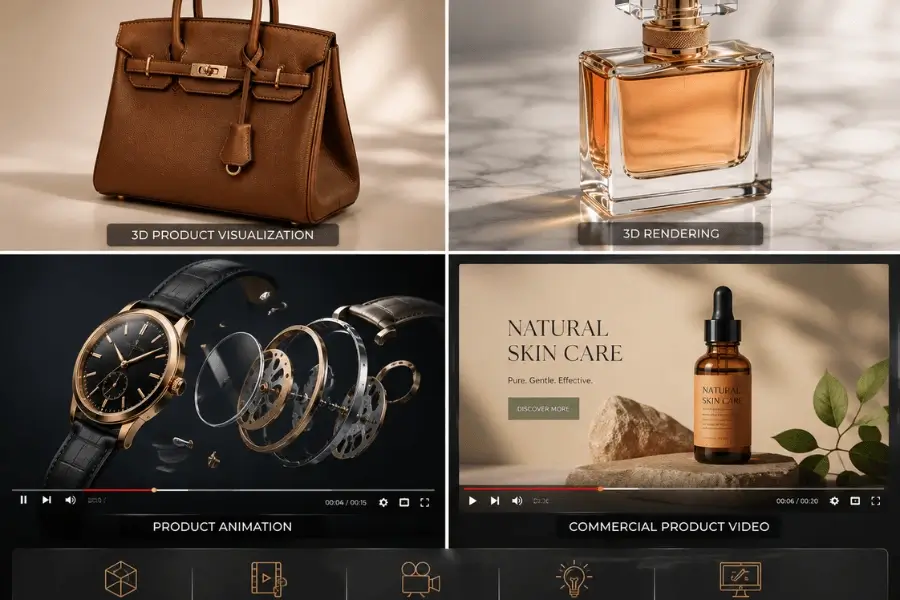
Start with the portfolio. But do not only look at whether the work appears attractive. Look for projects that are similar to yours. If you need product animation, review the provider’s product animation samples. If you need ecommerce videos, check whether they have experience presenting products clearly and professionally.
A relevant portfolio tells you more than a long list of general services.
Look for:
- Similar project types
- Similar visual styles
- Different levels of complexity
- Consistent quality across projects
- Realistic 3D rendering
- Clean video editing
- Strong composition and lighting
- Attention to product details
Ask yourself one simple question: Can this team produce the type of work my business needs?
2. Check Industry Experience
Industry experience can make the production process easier. A provider that has worked with ecommerce brands may already understand product presentation, marketplace requirements, and advertising formats. A team experienced in real estate visualization may understand floor plans, materials, lighting, camera angles, and architectural details.
You do not necessarily need a provider that has worked in your exact industry. However, relevant experience can reduce the amount of explanation and correction required during production.
3. Understand Their Production Workflow
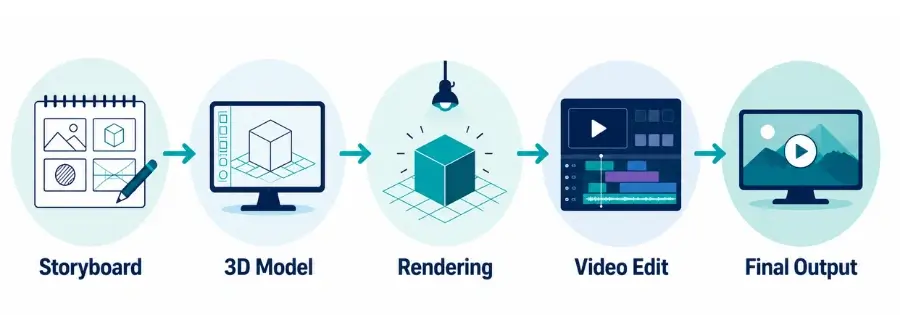
A professional video and 3D service provider should have a clear process for every project. They should explain each step from the first brief to the final delivery. This helps you understand what will happen at each stage. It also makes it easier to track progress, share feedback, and avoid delays.
A typical workflow may include:
- Project briefing
- Creative planning
- Script or storyboard, if needed
- Collecting project files
- 3D modeling or video production
- First draft
- Client feedback
- Revisions
- Quality check
- Final delivery
The exact process may vary from one project to another. Before the project starts, ask how you can give feedback. Ask who will check the work and when you will get the first draft. Also, ask how they handle changes or new requests.
A clear workflow helps everyone understand what to do. It reduces confusion and helps keep the project on time.
4. Evaluate 3D Modeling and Rendering Quality

For 3D projects, technical quality matters as much as creative quality. Look closely at the details in the provider’s previous work.
Check:
- Materials
- Textures
- Lighting
- Reflections
- Shadows
- Proportions
- Product details
- Camera angles
- Backgrounds
- Overall realism
A good 3D render should make the subject look convincing without unnecessary visual effects. For product visualization, small details matter. Poor proportions, materials, reflections, or lighting can make a model look less professional.
If your project involves complex products, ask whether the provider can work from CAD files, product photographs, sketches, technical drawings, or other reference materials.
5. Look at Video Quality Beyond the Visuals
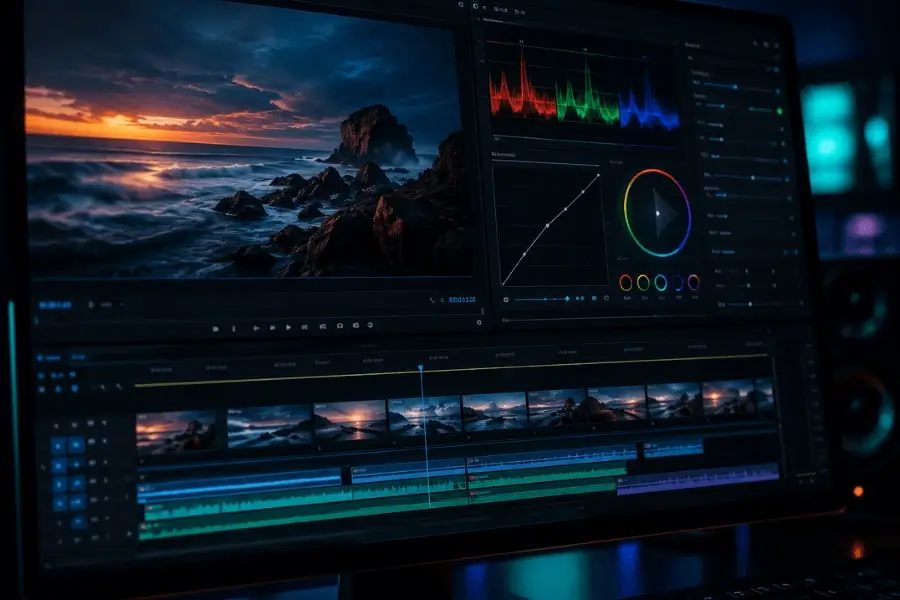
Good video production is more than putting clips together.
Depending on the project, evaluate:
- Storytelling
- Pacing
- Transitions
- Motion graphics
- Typography
- Sound design
- Color treatment
- Product presentation
- Brand consistency
- Final export quality
A good video should have a clear purpose. An ecommerce product video should make the product easy to understand. A promotional video should attract people and support the brand. An explainer video should make the topic easy to understand.
The best-looking video is not always the most effective one. The right service provider should understand your goal and create a video that supports it.
6. Ask About Communication
Good communication makes a project easier to manage.
Before choosing a provider, find out:
- Who will be your main contact?
- How often will you receive project updates?
- How should you submit feedback?
- How quickly does the team normally respond?
- How are urgent changes handled?
- What happens if project requirements change?
You should not have to repeatedly ask for basic project updates. A reliable partner should keep you informed. You should know what is done, what is in progress, and what they need from you.
7. Understand the Revision Policy
Creative work often needs revisions. That is normal. The important thing is to understand the revision process before the project starts.
Ask:
- How many revisions are included?
- What counts as a revision?
- Can you request changes after final approval?
- Are major changes charged separately?
- How are revision requests documented?
For larger projects, define approval stages before production begins. For example, a 3D animation project might have separate approval stages for the model, materials, camera movement, animation, and final render. This can prevent major changes late in the project.
8. Compare Pricing Carefully
Price should be part of your decision, but it should not be the only deciding factor. Different providers may charge different prices. Their services, experience, and deliverables may also be different. Before comparing prices, check what each provider includes.
Check whether the quote includes:
- Concept development
- Modeling
- Texturing
- Rendering
- Animation
- Video editing
- Voiceover
- Sound design
- Revisions
- Source files
- Final exports
- Commercial usage rights
A low initial quote may become expensive if important services are excluded. Instead of asking only, “Who is the cheapest?”, ask, “What am I getting for this price?”
9. Check Turnaround Time
Fast delivery can be valuable, especially when creative assets are connected to a product launch, campaign, or seasonal promotion. However, be careful with providers that promise extremely fast delivery without asking enough questions about your project.
A realistic timeline should consider:
- Project complexity
- Number of assets
- Modeling requirements
- Animation length
- Number of deliverables
- Revision rounds
- Client approval time
Ask for a production timeline before work begins. For larger projects, milestone-based delivery can make the process easier to manage.
10. Consider Scalability
Your current project may be small, but your workload may grow later. Choose a partner that can handle more work when needed.
This is particularly important for:
- Ecommerce businesses
- Marketing agencies
- Product brands
- Real estate companies
- Startups
- Businesses producing regular social media content
Ask whether the provider can handle recurring projects, multiple product variations, or larger batches of work. Scalability can save you from searching for a new provider every time your workload increases.
10 Questions to Ask Before Hiring a Video & 3D Partner
Before signing an agreement, ask these questions:
- Have you completed projects similar to mine?
- Can you show relevant portfolio samples?
- What does your production workflow look like?
- Who will manage my project?
- How many revision rounds are included?
- What turnaround time should I expect?
- Can you handle recurring or high-volume projects?
- What files will I receive at the end?
- How do you protect confidential project files?
- What exactly is included in the quoted price?
The answers can help you identify providers that are organized and prepared before production begins.
How to Compare Multiple Video & 3D Service Providers
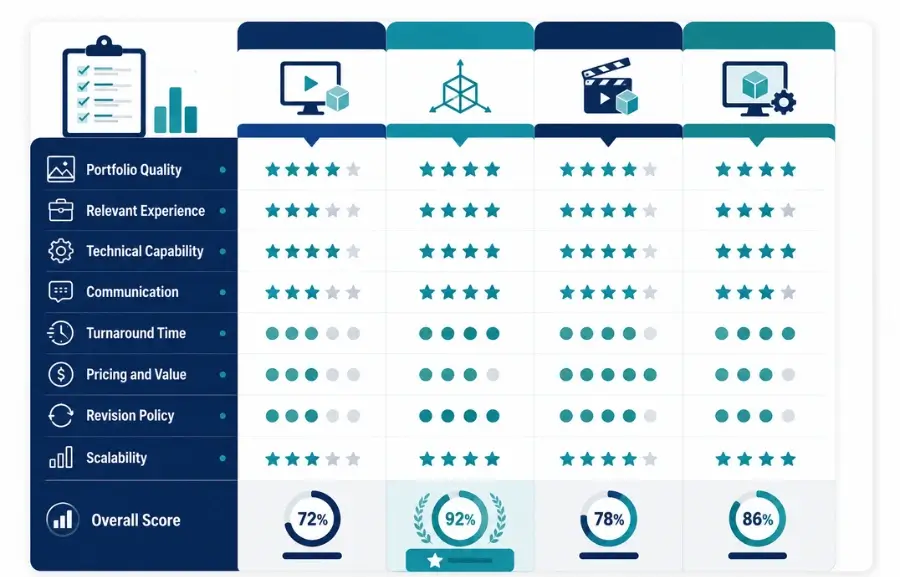
If you have shortlisted several providers, avoid making the decision based on portfolio quality alone. Create a simple comparison sheet.
| Factor | Suggested Weight |
| Portfolio Quality | 20% |
| Relevant Experience | 15% |
| Technical Capability | 15% |
| Communication | 10% |
| Turnaround Time | 10% |
| Pricing and Value | 10% |
| Revision Policy | 10% |
| Scalability | 10% |
| Total | 100% |
Score each provider from 1 to 5 for every category. This gives you a more balanced view. For example, a provider with a slightly higher price may still be the better choice if it has stronger relevant experience, clearer communication, better quality control, and a more reliable workflow.
In-House Team vs. External Video & 3D Partner
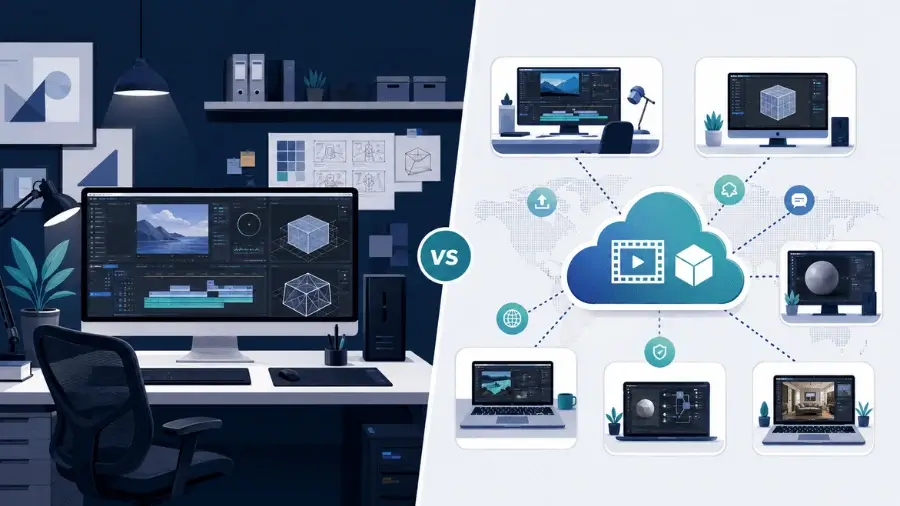
Some businesses are unsure whether they should build an internal creative team or outsource production. Both options can work.
| Factor | In-House Team | External Partner |
| Initial investment | Usually higher | Usually lower |
| Specialized skills | Depends on team | Access to specialized talent |
| Scalability | Depends on hiring | Easier to increase capacity |
| Project variety | Limited by team size | Often broader |
| Management | Internal | Shared with provider |
| Long-term control | Higher | Depends on agreement |
An in-house team can be a good choice if you need creative work every day. It gives you more control over the work. An external partner can help when you need special skills or extra support. You can get more work done without hiring more full-time staff.
Some businesses use both options. They handle creative planning and branding in-house. They outsource specialized work such as video editing, 3D modeling, or animation.
Red Flags to Watch For

Watch out for these warning signs:
- No relevant portfolio: They cannot show work similar to your project.
- Unclear pricing: The quote does not clearly explain what is included.
- No clear revision process: They do not explain how revisions or extra changes work.
- Poor communication: They are slow to reply or do not provide regular updates.
- Unclear file ownership: They do not explain who owns the files.
- No approval process: They do not explain how to approve the work.
These signs do not always mean a provider is a bad choice. But it is better to check these things before starting a project. Clear pricing, good communication, and a simple process can help you avoid problems later.
When Should You Outsource Video & 3D Services?
Outsourcing can be a good option when you do not have an in-house production team. It can also help when your team has too many projects, or you need special 3D or video skills.
You may also outsource when you need to create content regularly or need extra support for a short-term project. It can be a practical choice if you want to increase your production without hiring more full-time staff.
For example, an ecommerce brand can outsource 3D product visualization for a new product line. The brand can still manage its marketing and branding in-house.
A marketing agency can also work with an external production team when several clients need video content at the same time. This gives the agency extra support without adding more full-time staff.
How to Start With a New Video & 3D Partner
You do not always need to start with a large project. A small test project can help you evaluate the working relationship.
Give the provider a clear brief with:
- Project objective
- Target audience
- Reference examples
- Brand guidelines
- Required formats
- Deliverables
- Deadline
- Expected quality level
Then check the result. Do not look only at the final work. Also check how the provider handled the brief, communication, feedback, revisions, and delivery. This will help you decide if they are a good fit for a larger project.
Final Thought
The best video and 3D partner is not always the one with the biggest portfolio or the lowest price. Look for a team that understands your goals and delivers good work consistently. Good communication is also important. The team should also be able to support you as your needs grow.
If your business needs video editing, motion graphics, 3D modeling, rendering, animation, or product visualization regularly, working with an external team can be a good option.
Graphics Cycle provides video and 3D services for businesses, brands, agencies, and other organizations. Its services include video editing, motion graphics, 3D modeling, rendering, animation, and product visualization.
Before choosing a provider, compare their work, process, communication, pricing, and ability to handle your project. The right partner should make your work easier and help you get better results.
Frequently Asked Questions
What should I look for in a video and 3D services partner?
Look for relevant portfolio experience, strong technical skills, clear communication, transparent pricing, realistic turnaround times, a defined revision process, and the ability to handle your expected project volume.
How much do video and 3D services cost?
The cost depends on the project. Video length, editing complexity, 3D modeling requirements, animation, rendering quality, revisions, and deliverables can all affect the final price. Request a detailed quote based on your actual project requirements rather than comparing hourly or per-project prices alone.
How can I test a video or 3D service provider?
Start with a small project or test assignment when appropriate. Give the provider a clear brief and evaluate both the final result and the working process, including communication, revisions, and delivery.
What should a video and 3D services contract include?
A clear agreement should define the project scope, deliverables, timeline, payment terms, revision process, ownership rights, source files, confidentiality requirements, and what happens if the scope changes.
Can a video and 3D services partner handle ongoing projects?
Many providers can support recurring work, but you should confirm their capacity before starting. Ask about monthly volume, turnaround times, project management, and how they handle increases in workload.